
Sora vs. Runway Gen-3 vs. Luma: Which is best for paid client work?
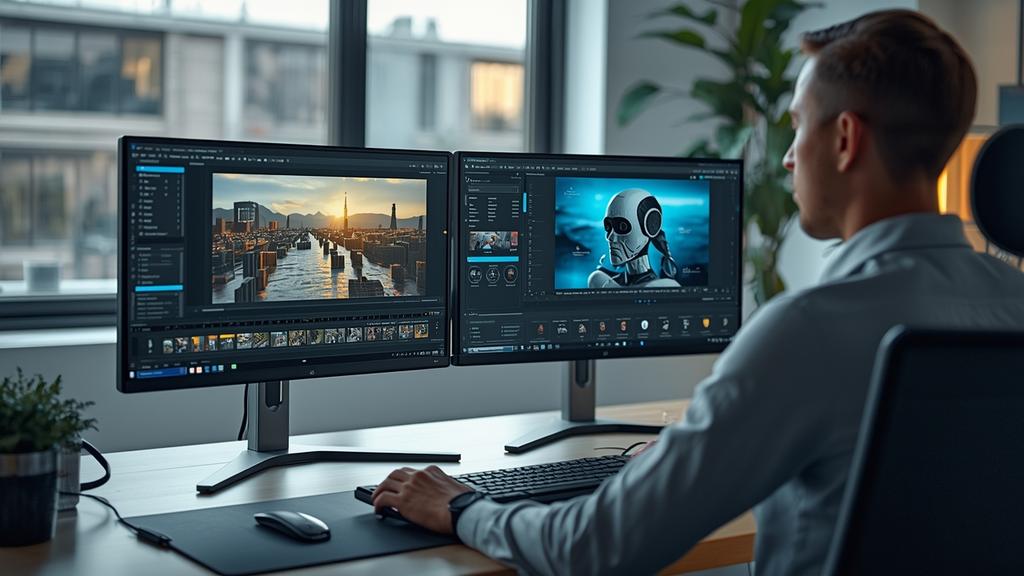
The battle for video dominance isn’t just about cool clips; it’s about consistency and control. I’ve tested the top three contenders to see which one delivers final-cut quality today.
After a decade of structuring content and managing SEO for high-ticket clients, I have learned that tools are only as good as their reliability. In 2026, we are no longer playing with experimental toys; we are selecting the engine that will power commercial campaigns and digital storytelling for the next fiscal year.
The Shift to Production-Grade Video in 2026
The landscape of digital content has shifted from simple text-to-video curiosities to full-scale cinematic production. For freelancers and solo entrepreneurs, the stakes are higher because clients now expect high-definition output that does not require hours of manual touch-ups. When we look for the best professional AI video generator, we are looking for three specific pillars: temporal consistency, physics accuracy, and granular control. If a tool cannot keep a character looking the same for sixty seconds, it is not ready for a paid contract.
The current market leaders have carved out distinct niches. While one focuses on the complexity of world-building, another prioritizes the director’s eye for camera movement, and the third focuses on pure speed and accessibility. Choosing between them depends entirely on your specific workflow and the type of deliverables your clients demand.
Sora: The Powerhouse for Narrative Depth
Sora has evolved significantly since its initial release. By early 2026, it has become the standard for creators who need to generate long-form narrative sequences. Unlike earlier versions that struggled with basic physics, the current iteration handles complex interactions like liquid splashing or fabric moving in the wind with startling realism. For a ghostwriter or a content strategist, this means you can storyboard an entire brand story and have it rendered in 4K without the standard warping issues that plagued older models.
The pricing for Sora in 2026 sits at approximately 45 dollars per month for the professional tier. This plan includes priority compute time and a dedicated commercial license, which is essential for any paid client work. The main advantage here is the sheer length of clips. We are now seeing native generations that reach the three-minute mark, allowing for full social media ads to be produced from a single prompt sequence. When scale is your priority, checking out an Ultimate Paid AI Video Guide helps determine which monthly subscription offers the best return on investment.
Key Features of Sora in 2026
- Multi-shot consistency: The ability to maintain character features across different scenes.
- Advanced physics engine: Realistic movement of shadows, light, and physical objects.
- Native 4K output: No external upscaling required for professional displays.
Runway Gen-3: The Director’s Choice
Runway has always been the favorite for those coming from a traditional film background. Their Gen-3 Alpha architecture focuses heavily on what they call Motion Control. If your client asks for a specific jib shot or a slow pan that reveals a product on a table, Runway is the tool that gives you the sliders to make it happen. It is less about letting the machine decide and more about telling the machine exactly where the camera should be.
The 2026 Pro plan for Runway is priced at 35 dollars per month. What makes this valuable for solo entrepreneurs is the suite of editing tools built directly into the platform. You can remove backgrounds, mask objects, and extend clips within the same interface. This integrated approach saves time that would otherwise be spent jumping between different software suites. While quality is subjective, business owners often prioritize render speeds to meet tight deadlines for social media campaigns.
Director Tools and Fine-Tuning
The introduction of the Director Mode in Gen-3 has changed how I approach client revisions. If a client wants the lighting to be moodier or the pace of a character’s walk to be slower, these can be adjusted through specific motion brushes. This level of intervention is what makes it a contender for the best professional AI video generator in a commercial setting where client feedback is constant.
Luma Dream Machine: Speed and Realism
Luma has positioned itself as the most accessible high-end tool. Their Dream Machine 3.0 model is remarkably fast. When I am working on a project that requires a high volume of short, punchy clips for TikTok or Instagram Reels, Luma is my first choice. It excels at hyper-realism, particularly with human skin tones and natural environments. It lacks some of the deep directing tools found in Runway, but it makes up for it with a very high success rate on the first prompt.
Luma’s pricing remains competitive at 30 dollars per month for a standard commercial license. The 2026 updates have introduced a feature called Style Reference, which allows you to upload an image and force the video to adopt its specific color palette and aesthetic. For brand consistency, this is a game changer. You can take a client’s brand guidelines and ensure every video clip generated fits their visual identity perfectly.
Comparing Workflow Efficiency
When we look at these three side-by-side for paid work, the decision often comes down to the revision process. Sora is excellent for high-concept, long-duration content where you want to set a prompt and let it work. Runway is the choice for precision work where the client has a very specific vision for camera angles and movement. Luma is the workhorse for high-volume, high-quality social content where time-to-market is the most important metric.
In my experience managing content structures, I have found that a hybrid approach often works best. I might use Sora for the foundational B-roll of a brand film and then use Runway to create the specific product shots that require precise camera movements. This ensures that the final deliverable looks like it was shot by a professional crew rather than generated as a series of disconnected clips.
Choosing Your Primary Tool
If you are a solo entrepreneur just starting to offer video services, Luma is likely the best entry point due to its balance of cost and ease of use. However, for those of us who have been in the SEO and marketing space for a long time, the control offered by Runway Gen-3 is hard to ignore. It allows for a level of professionalism that justifies a higher price point for your services. You are no longer just selling a video; you are selling a directed piece of media.
Sora remains the titan of the industry, but its power requires a more nuanced understanding of prompting to get the best results. It is the tool for the power user who wants to push the boundaries of what digital storytelling can be in 2026. Regardless of which you choose, the ability to generate high-fidelity video on demand has fundamentally changed the economics of content creation for freelance writers and ghostwriters who can now offer full-service visual packages.
The market is moving toward a future where the distinction between captured video and generated video is invisible to the average consumer. As a professional, your value lies in choosing the right engine for the right job and ensuring that the output serves the client’s ultimate goal: engagement and conversion.
